Search
- 1. Mapping Language and Identity
-
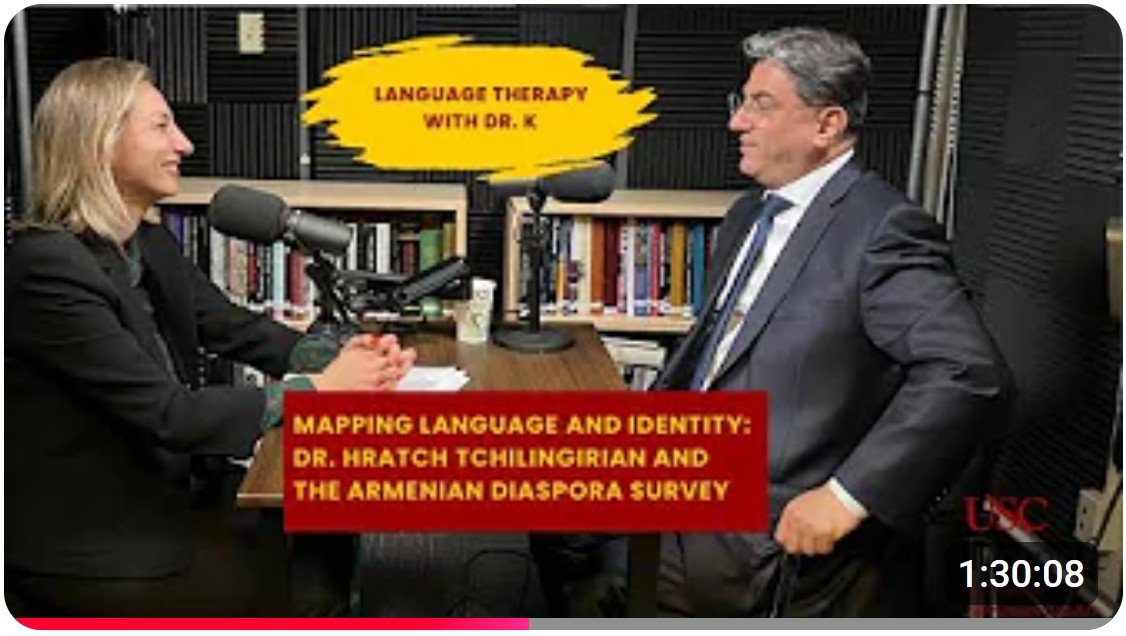
Mapping Language and Identity: Dr. Hratch Tchilingirian and the Armenian Diaspora Survey
""Language Therapy with Dr. K"
University of Southern California, Armenian Studies Institute, 7 May 2025
2025-05-20 - 2. Azerbaijan’s International Image-Making Strategies and Challenges
-

Azerbaijan's International Image-Making Strategies and Challenges
EVN Report, 14 January 2025 [Armenian version]
The Azerbaijani state has embarked on a concerted effort to enhance its international image following the Second Karabakh War in 2020 and especially since the subsequent ethnic cleansing of Armenians orchestrated by
2025-01-24 - 3. Being Armenian is a package
-
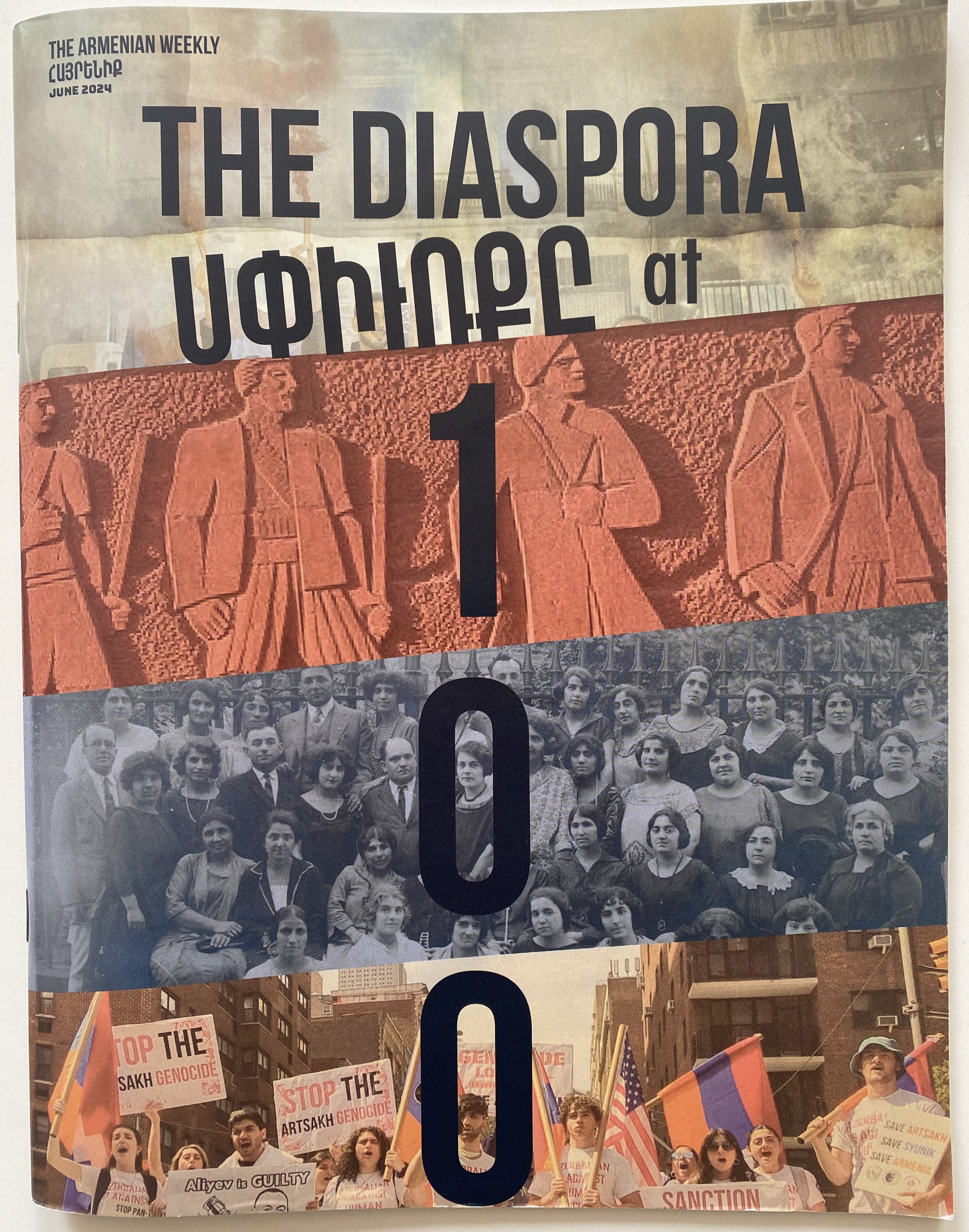
Hratch Tchilingirian, “’Being Armenian is a package.’ Some critical issues facing Diaspora organizations today,” in H. Oshagan and Kh. Tölölyan (eds.), The Diaspora at 100. (Boston: The Armenian Weekly), June 2024: 60-61.
2024-07-18 - 4. Le dictionnaire biographique
-
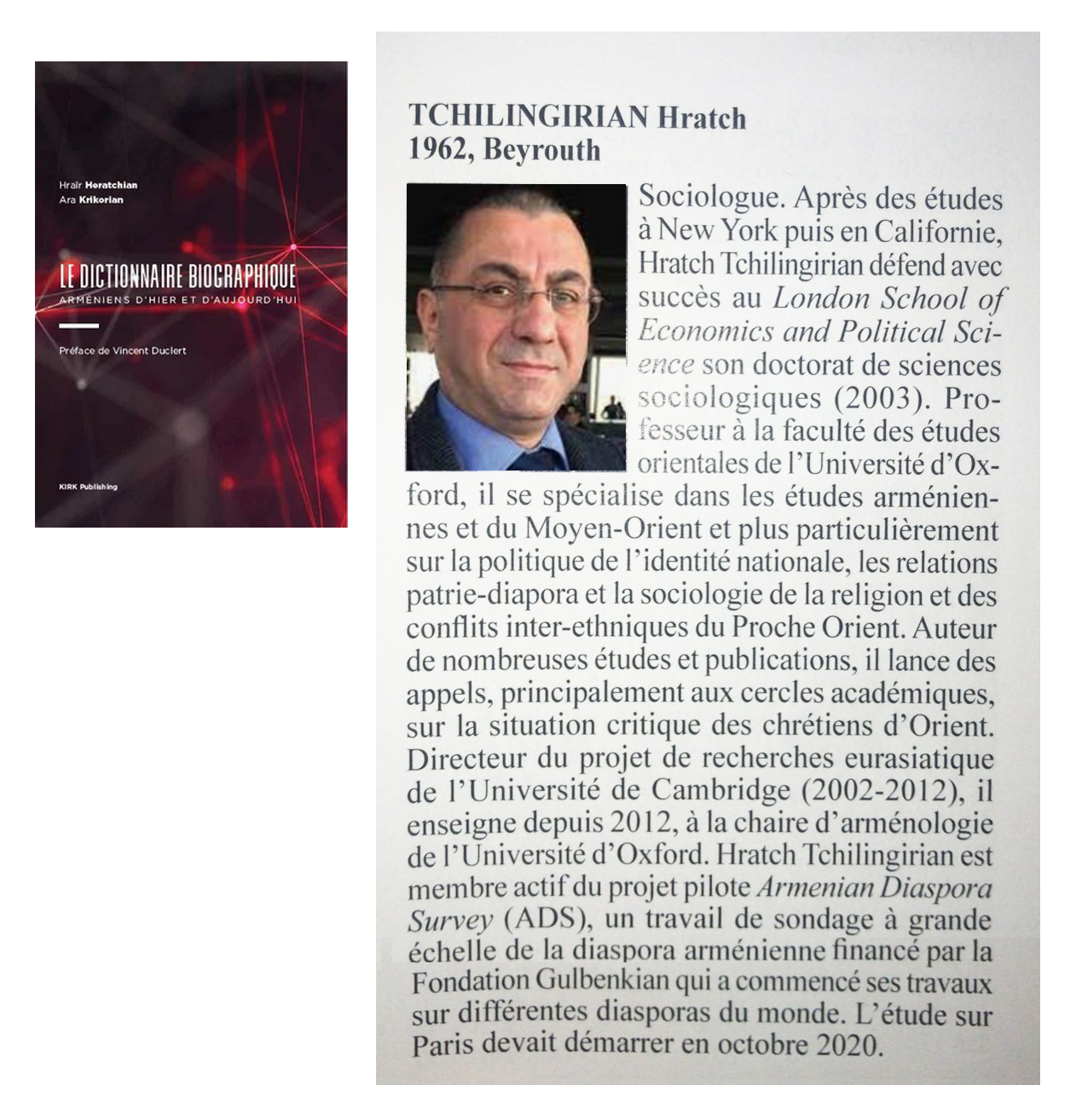
Tchilingirian, Hratch. Sociologue. Après des études á New York puis en Californie, Hratch Tchilingirian défend avec succès au London School of Economics and Political Science son doctorat de sciences sociologiques (2003). Professeur á la faculté des études orientales...
2022-06-23 - 5. Perceptions and expectations in Diaspora-Armenia relations
-

Speaker: “’Homeland Diaspora, Motherland Armenia’: perceptions and expectations in Diaspora-Armenia relations.”
Conference on The Impact of Regional Transitions on Armenia: Challenges and Opportunities, organised by Friedrich-Ebert-Stiftung and Institute of Oriental Studies, National Academy of Sciences. Tsagkhadzor, 12 June 2022.
2022-06-10 - 6. New hope for Turkey-Armenia to heal old wounds
- ... that the victory of Turkish ally Azerbaijan over Armenia in the November 2020 short, hot war may open the road to Turkish-Armenian rapprochement. This, in turn, may also lead the way to an opening of ...
- 7. 1in TV
-
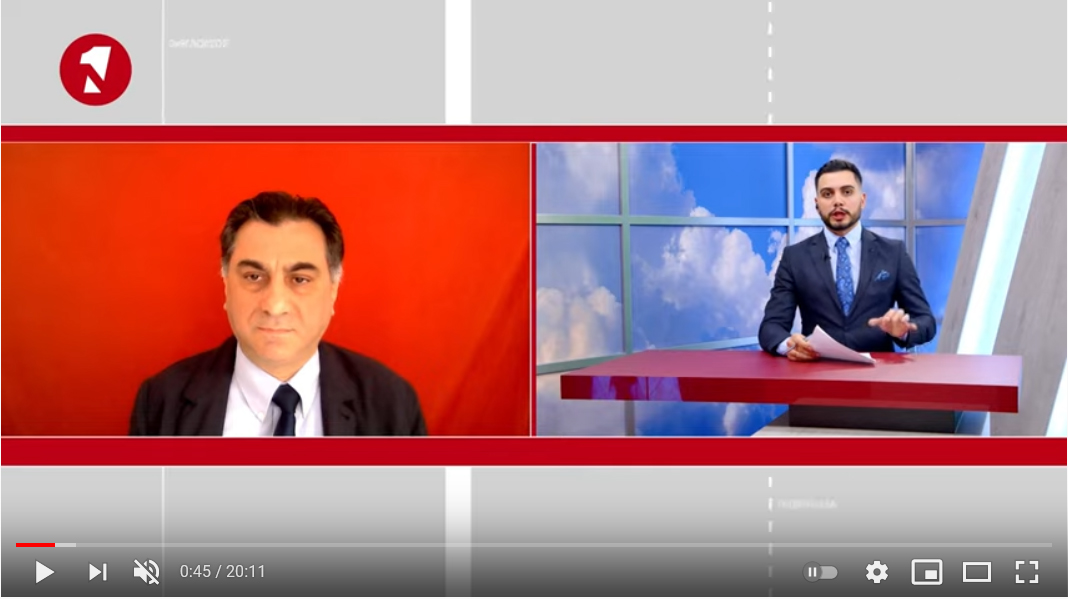
«Առաջին Լրատվական», 27 սեպտեմբեր 2021.
Armenia-Diaspora relations. 1in.am TV.
2021-10-02 - 8. 1in TV - Armenia-Diaspora relations - Hratch Tchilingirian
-
«Առաջին Լրատվական», 27 սեպտեմբեր 2021.
2021-10-02 - 9. Network Nation: Crisis
-
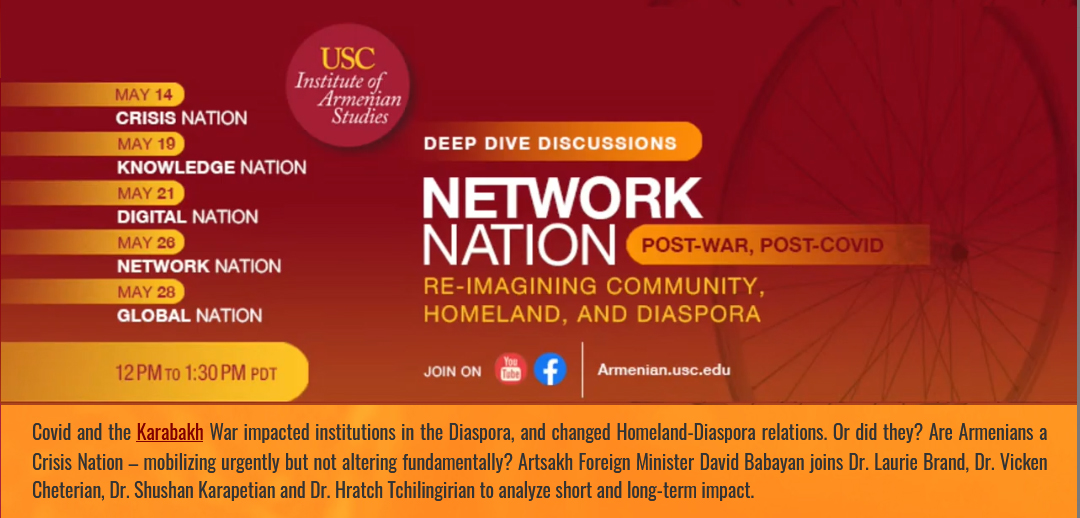
Network Nation, USC Institute of Armenian Studies, 14 May 2021
Covid and the Karabakh War impacted institutions in the Diaspora, and changed Homeland-Diaspora relations. Or did they? Are Armenians a Crisis Nation – mobilizing urgently but not altering fundamentally? Artsakh Foreign Minister David Babayan joins Dr. Laurie Brand, Dr. Vicken Cheterian, Dr. Shushan Karapetian and Dr. Hratch Tchilingirian to analyze short and long-term impact.
2021-06-28 - 10. Religion in a Non Religious War
-

"Religion in a Non-Religious War: The Conflict over Nagorno Karabakh"
Hratch Tchilingirian, University of Oxford
Strategic Note on Religion & Diplomacy (Georgetown University), May 2021, pp. 8-10.
The instrumentalization of religion—especially Islam by Azerbaijan in foreign relations—in the nonreligious Nagorno Karabakh conflict could further deepen the differences among the parties in the conflict and in the region, and make a final resolution and reconciliation even more difficult.
2021-05-28 - 11. Biden drops a genocide bomb on Erdogan
-
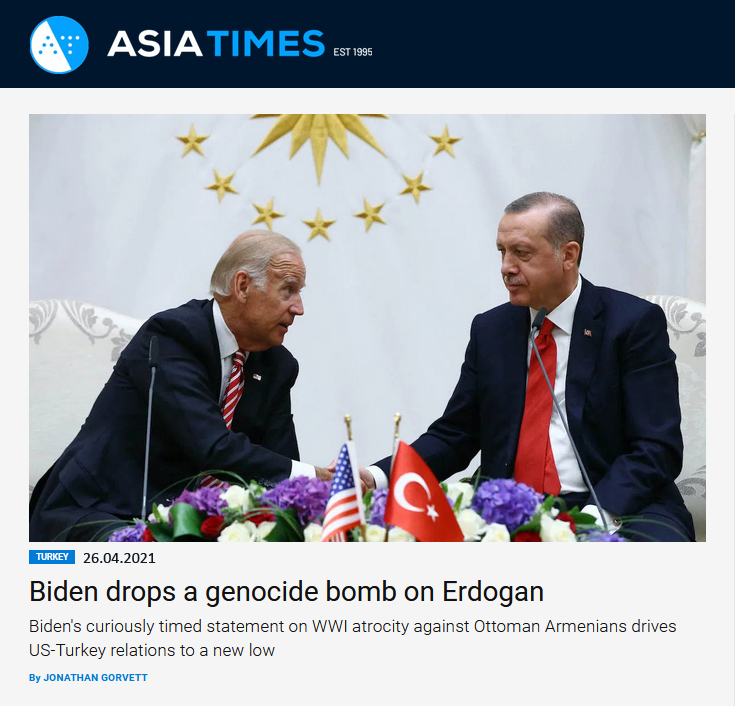
Biden drops a genocide bomb on Erdogan
Biden's curiously timed statement on WWI atrocity against Ottoman Armenians drives US-Turkey relations to a new low. . .“there was no additional strategic risk for the US in doing this,” Hratch Tchilingirian, from Oxford University’s Faculty of Oriental Studies, told Asia Times...
2021-04-27 - 12. Restructuring Minority Majority Relations
-
London School of Economics
LSE Forum for Russian, Eastern European and Eurasian Studies Schapiro Seminar
Lecture
“Restructuring Minority-Majority Relations in Soviet and Post-Soviet Abkhazia and Karabakh”
Dr. Hratch Tchilingirian, University of Cambridge
26 October 2004, 5:00 PM
D702, Clement House, LSE European Institute.
2020-11-05 - 13. ADS prend le pouls de la Diaspora
-
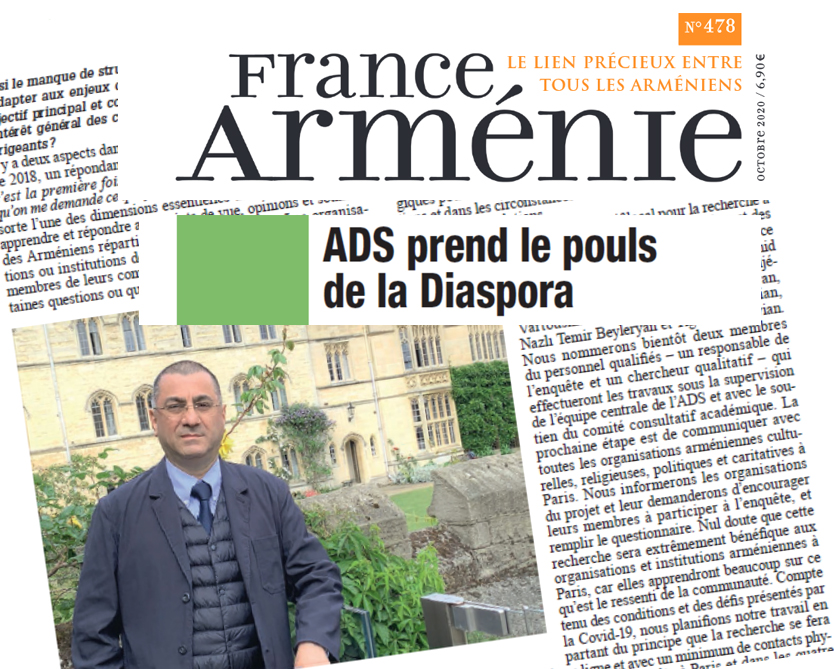
France Arménie, No. 478, Octobre 2020, pp. 35-37.
ADS prend le pouls de la Diaspora
Depuis deux ans, une équipe de chercheurs arméniens parcourt des communautés de la Diaspora pour y réaliser des enquêtes approfondies d’opinion publique. Cet automne, une équipe de chercheurs s’intéressera à la communauté francilienne. C’est pour mieux comprendre les motivations de cette initiative que nous avons interrogé le responsable du projet, Hratch Tchilingirian, sociologue, professeur à la chaire d’arménologie de l’Université d’Oxford.
2020-10-22 - 14. The Church in Russia and relations with the Diaspora
-
"У нас украли веру": как Армянская апостольская церковь оказалась на грани раскола

. . . "Главным инструментом централизации стало введение унифицированных уставов для Армянской церкви по всему миру", - говорит в интервью Би-би-си профессор Института Востока Оксфордского университета Грач Чилингирян
["The main instrument of centralization of administrative authority has been through the imposition of a unified bylaws for the Armenian Church globally," said Hratch Tchilingirian] ....
... «Կենտրոնացման գլխավոր գործիքը դարձավ Հայկական եկեղեցու միասնական կանոնադրությունների ներմուծումը ամբողջ աշխարհում»,- ասում է Օքսֆորդի համալսարանի Արևելքի ինստիտուտի պրոֆեսոր Հրաչ Չիլինկիրեանը։ (CivilNet.am 14 սեպտեմբեր, 2019)
2019-09-29 - 15. Dr. Hratch Tchilingirian Appointed Director of Armenian Diaspora Survey
-
Dr. Hratch Tchilingirian Appointed Director of Armenian Diaspora Survey
Calouste Gulbenkian Foundation, 23 May 2019
The Armenian Communities Department of the Calouste Gulbenkian Foundation, in partnership with the Armenian Institute of London, is pleased to announce the appointment of Dr. Hratch Tchilingirian as the Director of the Armenian Diaspora Survey (ADS) project.
2019-06-12 - 16. Electing 'Patriarch of Constantinople': Church and State relations in Turkey
-

Lecture: "Electing 'Patriarch of Constantinople': Church and State relations since the establishment of the Republic of Turkey." Eastern Christianity Lecture Seminar Series (6th edition), 28 May 2019, Pembroke College, Oxford.
2019-05-21 - 17. Un adieu de dix ans pour un voyage écourté
-

NB Hebdo, N° 143 – 14 mars 2019: 5-6.
In memoriam : le patriarche Mesrob Moutafian (1956-2019)
Par Hratch Tchilingirian
Le patriarche Mesrob Moutafi an était l'un des hommes d'église les plus courageux, les plus intègres et les plus inspirés de l'histoire contemporaine de l'Église arménienne. Sa jeunesse, son charisme, son
2019-03-13 - 18. A decade-long goodbye for a journey cut short
-
Published in




A decade-long goodbye for a journey cut short
In Memoriam: Patriarch Mesrob Mutafyan (1956-2019)
Hratch Tchilingirian | CivilNet.am 10 March 2019
Patriarch Mesrob Mutafyan was one of the most courageous, principled and forward looking church leaders in the contemporary history of the Armenian Church. His youth, charisma, strong pastoral and
2019-03-11 - 19. Field of Study
-
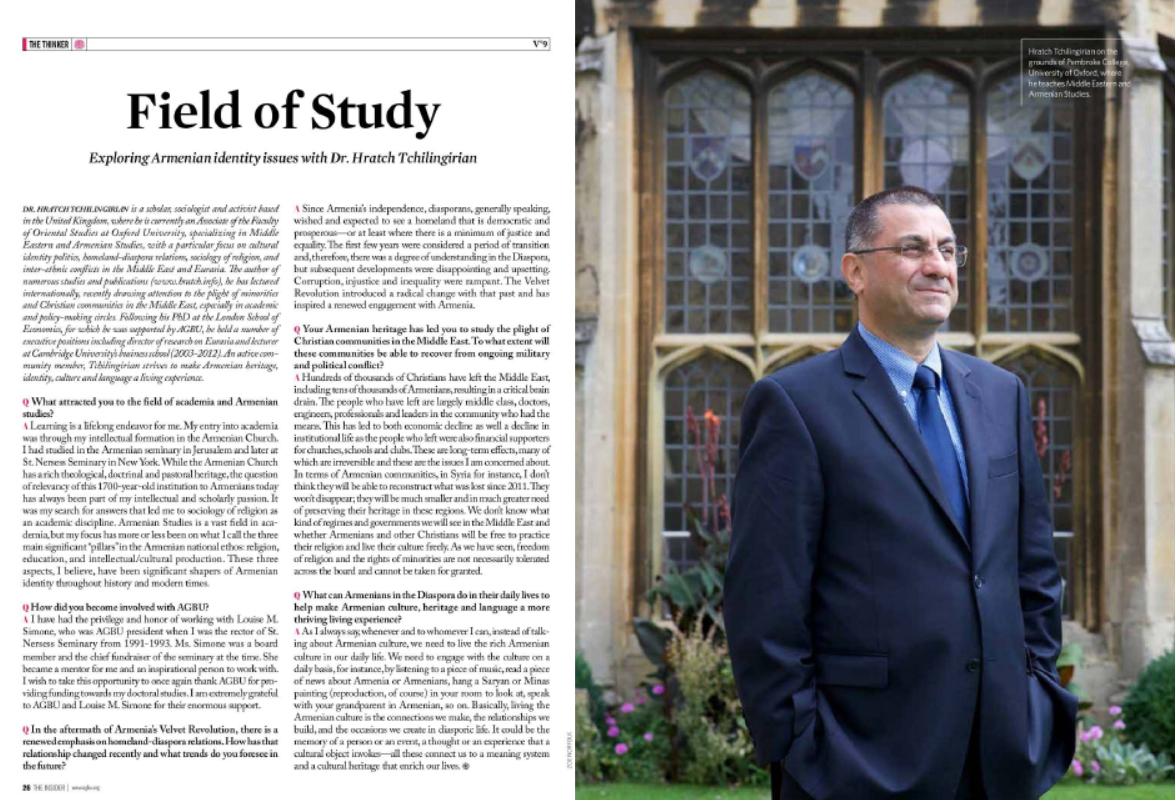
2019-01-02
- 20. Saving the Crown Jewel
-
AGBU Magazine | December 1, 2018
Saving the Crown Jewel
Why the future of the Armenian World’s most coveted address hangs in the balance
By Daniel Halton
Along the narrow stone-covered streets, winding alleyways and ancient chapels inside Jerusalem’s walled city, one of the oldest Christian communities in the world sets out to observe a sacred rite, just as it has for the past 1,700 years.... “The Armenian Patriarchate of Jerusalem is one of the richest and probably most significant living Armenian institutions in the world. The Patriarchate is the depository and custodian of an enormous religious and cultural heritage,” observed Hratch Tchilingirian, Professor of Armenian Studies at Oxford University.
2018-12-29